 by
by Mount Rigi rises gently yet confidently above Lake Lucerne, earning its poetic title as the “Queen of the Mountains.” While many visitors come for sweeping panoramas, scenic railways, and peaceful hiking trails, few realize that Mount Rigi is also an open-air geological archive. Its unusual rock formations tell a story that stretches back millions of years, revealing how rivers, glaciers, pressure, and time worked together to shape this iconic Swiss landmark.
Unlike the jagged granite peaks of the high Alps, Mount Rigi’s rock formations are softer, layered, and unexpectedly expressive. They form ridges, walls, caves, and terraces that feel sculpted rather than shattered. Understanding these formations not only deepens appreciation of the mountain’s beauty but also transforms an ordinary walk into a journey through Earth’s deep past.
1. Why Mount Rigi’s Rocks Look Different from Other Alpine Peaks
At first glance, Mount Rigi may not appear geologically dramatic. There are no needle-sharp spires or towering cliffs. Yet this is exactly what makes it special. Rigi belongs to a different geological family than the central Alps.

Instead of hard crystalline rocks like granite or gneiss, Mount Rigi is largely composed of sedimentary layers. These layers were formed from ancient debris—stones, sand, and gravel—carried by prehistoric rivers and deposited in vast basins long before the Alps rose.
When continental plates later collided, these deposits were lifted, folded, and tilted, creating the mountain we see today. The result is a landscape where rock formations appear stacked, ribbed, and banded, rather than fractured.
2. Nagelfluh: The Rock That Defines Mount Rigi
The most characteristic rock on Mount Rigi is Nagelfluh, a type of conglomerate rock. Nagelfluh looks like nature’s concrete: smooth pebbles and stones pressed together and cemented over time.

How Nagelfluh Formed
Millions of years ago, fast-flowing rivers rushed down from rising mountains, carrying stones of varying sizes. As the water slowed, these stones settled in thick layers. Over immense spans of time, pressure and minerals bonded them into solid rock.
Why It Creates Unique Shapes
Nagelfluh erodes unevenly. Some stones loosen and fall away, while others remain locked in place. This produces:
- Knobbly rock faces
- Bulging walls
- Rounded edges instead of sharp corners
These features are easy to spot along trails and ridgelines, especially where weather has exposed the rock.
3. Layered Ridges: The Natural Architecture of Rigi
One of the most striking geological features of Mount Rigi is its parallel ridges, which run across slopes like giant stone ribs.
These ridges form because:
- Harder rock layers resist erosion
- Softer layers wear away more quickly
Over time, this difference creates long, narrow rock bands that stand out from the surrounding terrain. When sunlight hits these ridges at an angle—especially early morning or late afternoon—they cast dramatic shadows that emphasize the mountain’s layered structure.
These formations give Mount Rigi its recognizable profile when viewed from Lake Lucerne.
4. Rock Terraces and Natural Steps
As you hike Mount Rigi, you may notice flat ledges or step-like platforms appearing along slopes. These are not man-made.
They occur where erosion pauses temporarily at the boundary between rock layers. Softer layers erode until they meet a harder band, creating a natural shelf. Over thousands of years, multiple shelves form, resulting in:
- Walkable terraces
- Resting platforms
- Ideal viewpoints
Many traditional paths and viewpoints were later built along these natural steps, showing how humans adapted to geological features rather than reshaping them.
5. Caves, Overhangs, and Rock Shelters
Mount Rigi also contains small caves and rock overhangs, though not the deep caverns found in limestone regions.
These features develop when:
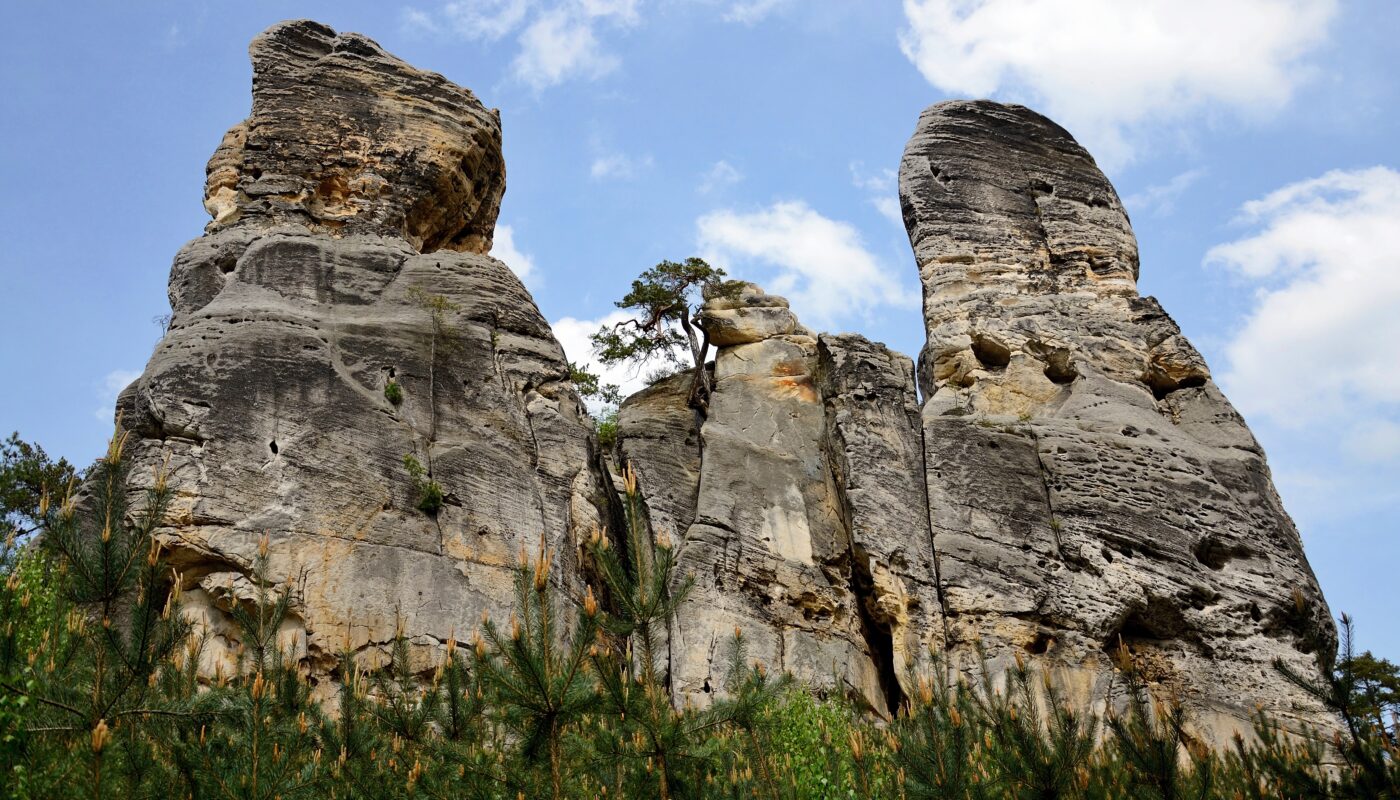
- Water penetrates cracks in softer rock
- Freeze–thaw cycles widen those cracks
- Softer layers erode beneath harder ones
Eventually, shallow caves and sheltered niches appear. Historically, these spaces were used by shepherds and travelers as temporary refuge from storms. Today, they provide habitats for birds, mosses, and alpine plants that prefer shade and moisture.
6. Traces of Ice: Glacial Influence on Rigi’s Rocks
Although Mount Rigi is not extremely high, it was still shaped by glaciers during ice ages.
What Glaciers Left Behind
- Smoothed rock surfaces
- Scratched lines etched into stone
- Large boulders resting far from their original source
These boulders, known as glacial erratics, were carried by ice and dropped when glaciers melted. Finding one is like spotting a misplaced puzzle piece—it doesn’t match the surrounding rock, which is the clue to its icy journey.
Glacial movement also helped soften the mountain’s contours, rounding ridges and polishing exposed stone.
7. Talus Slopes: Mountains Still in Motion
At the base of steeper rock faces, you’ll often see piles of broken stone called talus slopes. These form when rocks crack and fall due to:
- Temperature changes
- Ice expansion in cracks
- Gravity
Talus slopes are evidence that Mount Rigi is not static. Even today, it continues to evolve. Each winter and spring subtly reshapes its surface, reminding visitors that geological time never truly stops.
8. Weathering Patterns You Can See Up Close
Mount Rigi’s accessibility allows visitors to observe weathering processes without special equipment.
Look for:
- Flaking rock surfaces
- Pebbles protruding from conglomerate
- Color changes indicating moisture retention
Rainwater, frost, wind, and plant roots all contribute to slow but persistent transformation. Even lichen plays a role, producing mild acids that break down minerals over time.
This constant interaction between stone and environment is what gives Rigi its textured, lived-in appearance.
9. Rock Formations and Local Legends
Rocks often inspire stories, and Mount Rigi is no exception. Over generations, locals attached meaning to unusual stone shapes and shadowy crevices.
Some formations were believed to be:
- Resting places for mythical creatures
- Natural guardians watching over villages
- Signs of supernatural events
While modern science explains their origins, these legends remain part of Rigi’s cultural fabric. They reflect humanity’s instinct to turn unusual landscapes into storytelling companions.
10. How Trails Reveal Geological History
Mount Rigi’s trail network doubles as a geological tour. Without realizing it, hikers pass through:
- Ancient riverbeds turned to stone
- Glacially smoothed ridges
- Zones where rock layers tilt visibly
Certain panoramic paths offer side views of exposed strata, allowing walkers to see how layers angle upward like pages in an open book.
This makes Mount Rigi ideal for casual geology enthusiasts—no technical knowledge required, just observation.
11. Why Mount Rigi Matters Geologically
Mount Rigi is significant not because it is extreme, but because it is readable. Its rocks are approachable, its formations visible, and its processes understandable.
It bridges the gap between:
- Lowland sedimentary landscapes
- High Alpine tectonic drama
This makes it a natural classroom for understanding how mountains form without needing advanced equipment or dangerous climbs.
12. Tips for Observing Rock Formations on Your Visit
To fully appreciate Mount Rigi’s geology:
- Walk slowly and look closely at trail edges
- Notice changes in rock texture and color
- Observe how plants grow differently on stone versus soil
- Compare ridgelines from different viewpoints
Morning and late afternoon light is best for revealing texture and relief.
Final Thoughts: Reading the Stone of Mount Rigi
Mount Rigi’s rock formations are quiet storytellers. They don’t shout with towering cliffs or jagged peaks, but they speak through layers, curves, and patterns shaped by time. Every ridge, pebble, and ledge is a record of movement—of rivers that no longer flow, glaciers that no longer exist, and pressures that shaped continents.
Understanding these formations transforms Mount Rigi from a scenic destination into a living geological narrative. Once you know what to look for, the mountain reveals itself not just as beautiful, but as profoundly meaningful—an ancient story written in stone, waiting to be read by anyone willing to look a little closer.