 by
by Mount Rigi, rising above Lake Lucerne and Lake Zug in the heart of Switzerland, is known for its sweeping panoramas, lush pastures, and historical railways — but the skies above Rigi often steal the show. In this unique alpine environment, dramatic light and atmospheric conditions combine to create captivating optical phenomena that delight observers year-round. From ethereal fog bows at dawn to crystalline halos around the sun and moon, Rigi’s skies offer a natural light show that reflects both geographic altitude and climatic complexity.
This article explores the atmospheric phenomena most frequently seen on Rigi, explains how and why they form, and offers tips on where and when you’re most likely to witness them.
What Makes the Atmosphere Above Rigi Special?
Before diving into specific phenomena, it helps to understand why Rigi is such a great stage for atmospheric effects.
Altitude and Air Mass
At around 1,797 meters (5,895 feet), Rigi’s summit places observers above much of the lower-altitude pollution and haze found in valleys. Cleaner air allows light to interact more directly with water droplets and ice crystals — essential ingredients for many optical phenomena.
Moisture and Temperature Variation
The interface between lakes and mountain air creates dynamic thermals and frequent fog, especially in mornings and evenings. Cold air masses can trap moisture near the surface, while warmer sunlight later in the day dissolves it — producing conditions ideal for fog bows, halos, and iridescent effects.
Clear Skies and Low Light Pollution
Rigi’s rural environment means low light pollution, making subtle sky displays more visible. Alpine air is also clearer at night, enhancing lunar halos and star diffraction patterns.
All of these elements make the Rigi region one of the most rewarding places in Central Europe to observe atmospheric optical phenomena.
1. Fog Bows — Pale Rainbows in the Mist
What Is a Fog Bow?
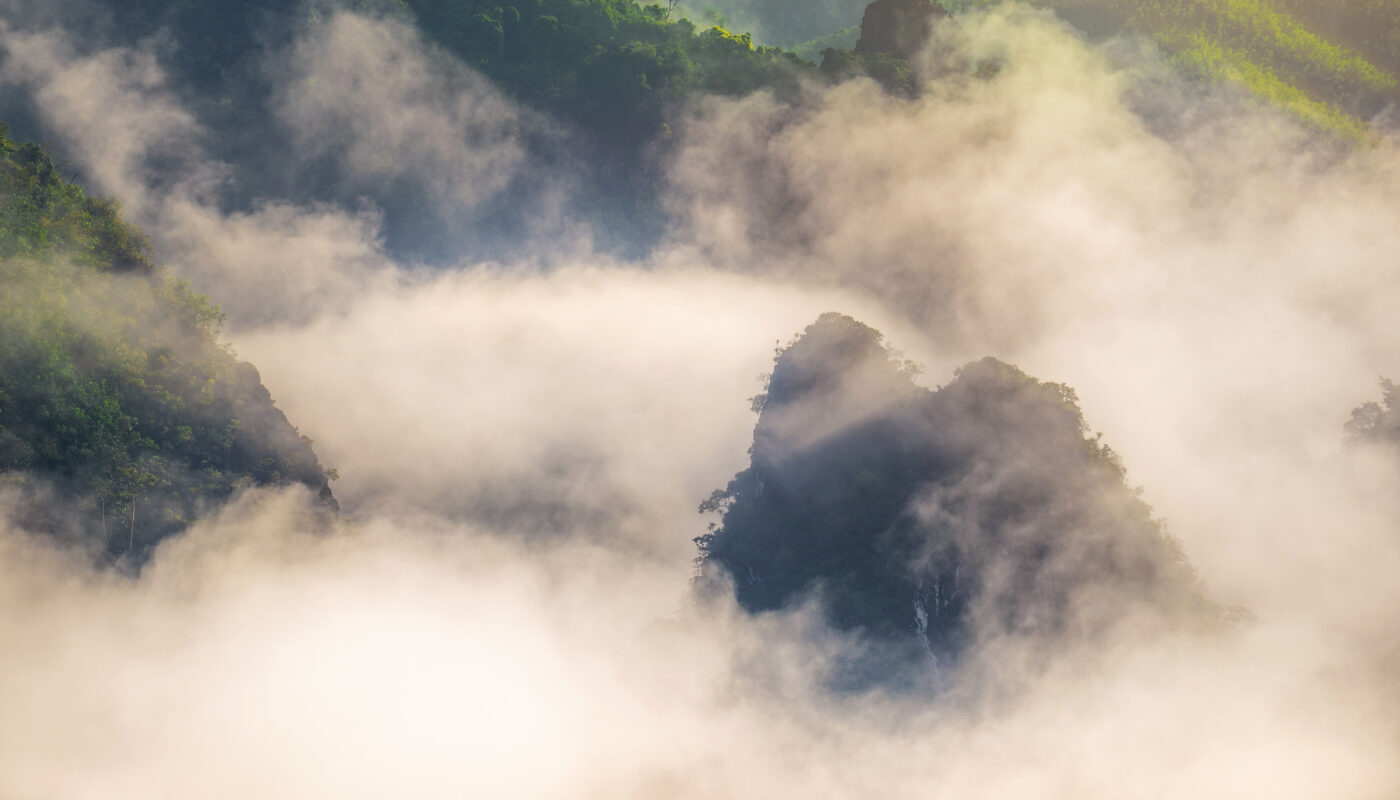
A fog bow, sometimes called a white rainbow, looks like a rainbow but appears as a faint, nearly colorless arc. Where a traditional rainbow is created by sunlight refracting and reflecting in large raindrops, fog bows form when light interacts with much smaller droplets in fog or mist.
Why They Appear Near Rigi
- Mountain fog and low clouds often settle into valleys and slowly lift up the slopes at sunrise.
- Early morning temperature inversion (cool air near the ground with warmer air above) traps droplets at just the right size for fog bow formation.
- Sunlight at low angles (morning or late afternoon) increases the likelihood of bow formation.
How They Form
Fog droplets are so small that they diffract (bend) light more than they refract it. The result:
- A broad, whitish arc
- Very subtle colors, usually washed out compared to a rainbow
- A large angular radius compared to rainbows
Where and When to See Them
The best viewing conditions on Rigi:
- Early dawn or shortly after sunrise
- When low-lying fog fills the valleys
- On clear days following rain or during calm, moist conditions
Look toward the sun with your back to the fog bank — the fog bow typically appears opposite the sun, near the opposite horizon.
2. Solar and Lunar Halos — Rings of Ice and Light
What Is a Halo?
A halo is a ring of light that surrounds the moon or sun. Halos occur when light enters and exits ice crystals in the atmosphere, bending (or refracting) the light at specific angles — most commonly 22 degrees.
Why Halos Are Common on Rigi
Rigi’s altitude places observers near the base of cold cloud layers (cirrus or cirrostratus clouds) that float high above the mountain. These clouds contain tiny hexagonal ice crystals — the perfect medium for halo formation.
Types of Halos You Might See
- 22° halo: The most common ring, surrounding the sun or moon at a radius of about 22 degrees.
- 46° halo: A larger, fainter ring that requires abundant high ice clouds.
- Tangent arcs, sundogs, and parhelia: Bright spots on either side of the halo caused by specific crystal orientations.
Lunar Halos
At night, moonlight interacting with ice crystals can produce halos around the moon. Because moonlight is dimmer than sunlight, lunar halos appear fainter and ghostly, but they are often clearer on still, cold nights.
When to Catch Halos on Rigi
- Winter and early spring: More high-altitude ice clouds
- Before weather fronts: Thin cirrus often precedes wet or stormy weather
- On clear nights with a bright moon
How They Form (Simple Physics)
When light enters hexagonal ice crystals:
- It bends at specific angles
- Predominantly 22° of deviation produces the bright halo ring
- Light is spread into a circular arc centered on the light source
Halo intensity depends on:
- Crystal size and density
- Uniformity of crystal orientation
3. Sundogs, Sun Pillars, and Light Pillars
Sundogs (Parhelia)
Sundogs appear as bright spots on either side of the sun, often at the same elevation, formed by ice crystals in thin, high clouds.
- When the sun is low, horizontal ice crystals act like tiny prisms.
- They bend sunlight toward the observer, creating colorful patches.
- Sundogs are often red near the sun and blue on the outside edge.
Sun Pillars
A sun pillar is a vertical column of light extending above or below the sun. It does not mean physical beams of light — instead, it’s an optical effect caused by flat, horizontally oriented ice crystals reflecting sunlight.
Sun pillars are most visible:
- Around sunrise or sunset
- When light reflects off low sun angles
Night Light Pillars
Though most common around the sun, light pillars can also occur at night when city lights or a full moon reflect off falling hexagonal ice crystals — creating tall shimmering columns.
Where You Might See These on Rigi
Open ridges, lakeside views, or reflective snowfields enhance visibility. Sundogs and pillars are often most vivid when the sky is partially cloudy and the sun is near the horizon.
4. Glories — Rainbow Rings Around Your Shadow
What Is a Glory?
A glory is a series of concentric, colored rings seen around the shadow of an observer’s head on clouds or mist — most famously seen from planes, mountaintops, or cliff edges.
How It Relates to Rigi
If you stand above a cloud bank or fog layer with the sun behind you, your shadow can be cast onto the mist in front of you. Light scattering and wave diffraction around tiny droplets produces:
- A bright center (your head’s shadow, called the Brocken spectre)
- Colored rings that circle the shadow
Peak Moments
- Just after sunrise or sunset
- When fog lingers in the valleys below Rigi
- When you are high above a layer of mist
Glories often surprise viewers because the circular rings trace the observer’s shadow — giving the impression that the colors orbit you.
5. Iridescent Clouds and Cloud Coloration
What Is Cloud Iridescence?
Cloud iridescence is a soft spectrum of pastel colors — pinks, greens, blues — seen in thin clouds near the sun. It occurs when sunlight diffracts around tiny, similarly sized water droplets or ice crystals.
Why It Happens on Rigi
Rigi’s altitude and frequent cloud formations around ridges often produce clouds that are:
- Thin enough for diffraction
- At the right distance from the sun
- Made of uniform droplets
The result can be fleeting but stunning flashes of color near the edges of clouds.
Best Times to Observe
- Late mornings or early afternoons when clouds begin forming over the ridges
- Days after weather changes
- Transitional weather with mixed sun and thin cloud cover
6. Crepuscular and Anti-Crepuscular Rays
Crepuscular Rays
These are beams of sunlight radiating from the sun through gaps in cloud or ridge shadows, appearing like rays streaming across the sky.
They are most vivid during:
- Sunrise
- Sunset
- Midday when sun angle and cloud breaks align
Anti-Crepuscular Rays
Seen opposite the sun, these rays converge at the horizon due to perspective. On Rigi, if hazy conditions and scattered clouds line the horizon opposite sunset or sunrise, you can see these dramatic light lines.
7. Green Flashes and Mountain Sunsets
Though most commonly associated with ocean sunsets, green flashes can occur from mountain peaks like Rigi when the atmosphere layers refract sunlight at the moment the sun dips below the horizon. Rigi’s clean, dry air makes optical distortion minimal and can occasionally accentuate the fleeting green flicker at dusk.
Whether viewed over lakes below Rigi or across alpine ridges, this phenomenon is rare but breathtaking.
8. Observing Aurora Effects (Geomagnetic Events)
While Switzerland lies well south of the auroral oval, strong geomagnetic storms can sometimes trigger faint aurora activity visible at higher latitudes. On exceptionally clear nights with minimal light pollution — such as from Rigi’s summit — perceptive observers might notice subtle greenish or pinkish light near the northern horizon during significant solar activity.
This is uncommon but possible, especially during peaks in the solar cycle.
Tips for Spotting Atmospheric Phenomena on Rigi
Best Times of Day
- Sunrise and sunset: Halos, pillars, fog bows, and green flashes
- Morning fog: Ideal for fog bows and glories
- Clear nights with full moon: Lunar halos and possible nocturnal light pillars
Best Spots
- Rigi Kulm summit: Wide sky views, ideal for halos and sun effects
- Lakeside approaches: Reflective surfaces enhance atmospheric light
- Forest clearings: Good for glories against fog banks
What to Bring
- Polarizing sunglasses (for halos & sundogs)
- DSLR or smartphone with panorama mode
- Tripod for low-light lunar halos
- Patience (optical phenomena can be fleeting)
Why These Phenomena Matter
Atmospheric light displays aren’t just pretty — they are natural reminders of the complex interactions between light, moisture, and the Earth’s atmosphere. In alpine environments like Rigi, where altitude, air clarity, and topography interact uniquely, these displays become especially vivid.
Observing them enriches both scientific curiosity and aesthetic experience. They connect us to the physics of light, the rhythm of weather, and the dynamic beauty of mountain climates.
Conclusion
On Mount Rigi, the sky is as much a destination as the mountains and lakes below. From pale arcs of fog bows piercing morning mist to expansive halos encircling the sun and moon, these atmospheric phenomena offer a reminder that nature’s artistry plays out on a grand scale above us.
The next time you visit Rigi — whether as a hiker, a sunrise chaser, or a sky-watching enthusiast — take a moment to look up. With sun, fog, ice crystals, and clear alpine air working together, you might just witness one of nature’s most captivating light shows. And when you do, you’ll see why atmospheric phenomena on Rigi have become part of the mountain’s enduring magic.