 by
by In central Switzerland, Mount Rigi, also referred to as the “Queen of the Mountains,” rises magnificently between Lake Lucerne and Lake Zug, Its slopes and summit are beloved by hikers, photographers, and nature lovers for panoramic views of the Alps, pristine forests, and unforgettable sunrise and sunset moments. But beyond its scenic beauty, Mount Rigi is also a fascinating place from a weather and climate perspective. Despite its relatively modest elevation compared to the high Alps, Rigi exhibits a distinct microclimate—a set of localized weather patterns and conditions that differ significantly from those in neighboring valleys and lakes.
Understanding how Rigi creates its own microclimate involves examining topography, air circulation, thermal dynamics, and the interaction between land and water bodies. In this article, we’ll explore the mechanisms behind Mount Rigi’s unique weather, how it affects local ecosystems and human activities, and why this mountain is an ideal natural laboratory for climate observation.
1. What Is a Microclimate?
A microclimate refers to the climate of a small, specific place that can be noticeably different from the surrounding broader region. Microclimates can be created by many factors, including:

- Local topography
- Proximity to water bodies
- Vegetation and land cover
- Slope orientation and elevation
- Urban structures (in built environments)
In natural landscapes, mountains are among the most influential features in shaping microclimates. They act as barriers to air movement, create temperature gradients, and influence cloud formation and precipitation patterns. Rigi’s distinct position and shape make it a textbook example.
2. Rigi’s Geography and Its Role in Shaping Weather
Mount Rigi’s location between two large lakes—Lake Lucerne (Vierwaldstättersee) to the south and Lake Zug (Zugersee) to the north—gives it a unique geographic advantage. Situated at elevations ranging from about 400 meters at the lake shores up to 1,798 meters at the summit, Rigi rises sharply, creating steep slopes and distinct vertical zones.
A Dual Influence from Two Lakes
Lakes are significant climate moderators. During the day, they absorb heat; at night, they release it slowly. Rigi lies directly between:

- Lake Lucerne, a deep and irregularly shaped lake with complex shorelines and large surface area
- Lake Zug, smaller but still substantial in influencing local air temperatures
Air over these water bodies tends to warm more slowly than air over land during the daytime and cool more slowly at night. As a result, the lakes create thermal gradients that drive localized winds and temperature differences — especially on Rigi’s lower slopes.
3. Thermal Dynamics: Heating and Cooling Patterns
Daytime Dynamics
During sunny days, the sun heats the mountain slopes quickly while the lakes remain relatively cool. This differential heating causes:
- Upslope Winds — Warm air over the sunlit slopes rises, drawing cooler air inland from the lakes.
- Thermal Convection — As warm air ascends, it cools adiabatically (without losing heat to the environment), which can enhance cloud formation near the summit even when it’s clear in the valleys.
These daytime processes make Rigi’s slopes feel warmer and breezier than surrounding areas at the same elevation.
Nighttime Inversion Layers
At night, the slopes cool faster than the lakes and valley floors. Cool air drains downward into the valleys while relatively warmer air remains above — a phenomenon known as a temperature inversion. Inversions can:
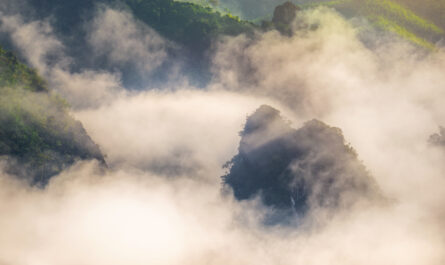
- Trap moisture and fog in valleys
- Lead to calm, cold nights on the slopes
- Create distinct frost patterns higher up compared to nearby lowlands
This combination of rising daytime air and draining nighttime cold forms a daily cycle that reinforces Rigi’s microclimatic identity.
4. Orographic Effects: Mountains and Moisture
Mountains influence weather patterns by forcing air to rise as it encounters elevated terrain — a process called orographic lift. As moist air from the lakes or surrounding lowlands is pushed upward along Rigi’s slopes, it cools and loses its ability to hold moisture.
Clouds and Precipitation Near the Summit
As air ascends, its temperature drops by approximately 6.5°C per 1,000 meters (the environmental lapse rate). This cooling leads to:
- Cloud formation near critical elevations
- Localized showers and precipitation if moisture content is high
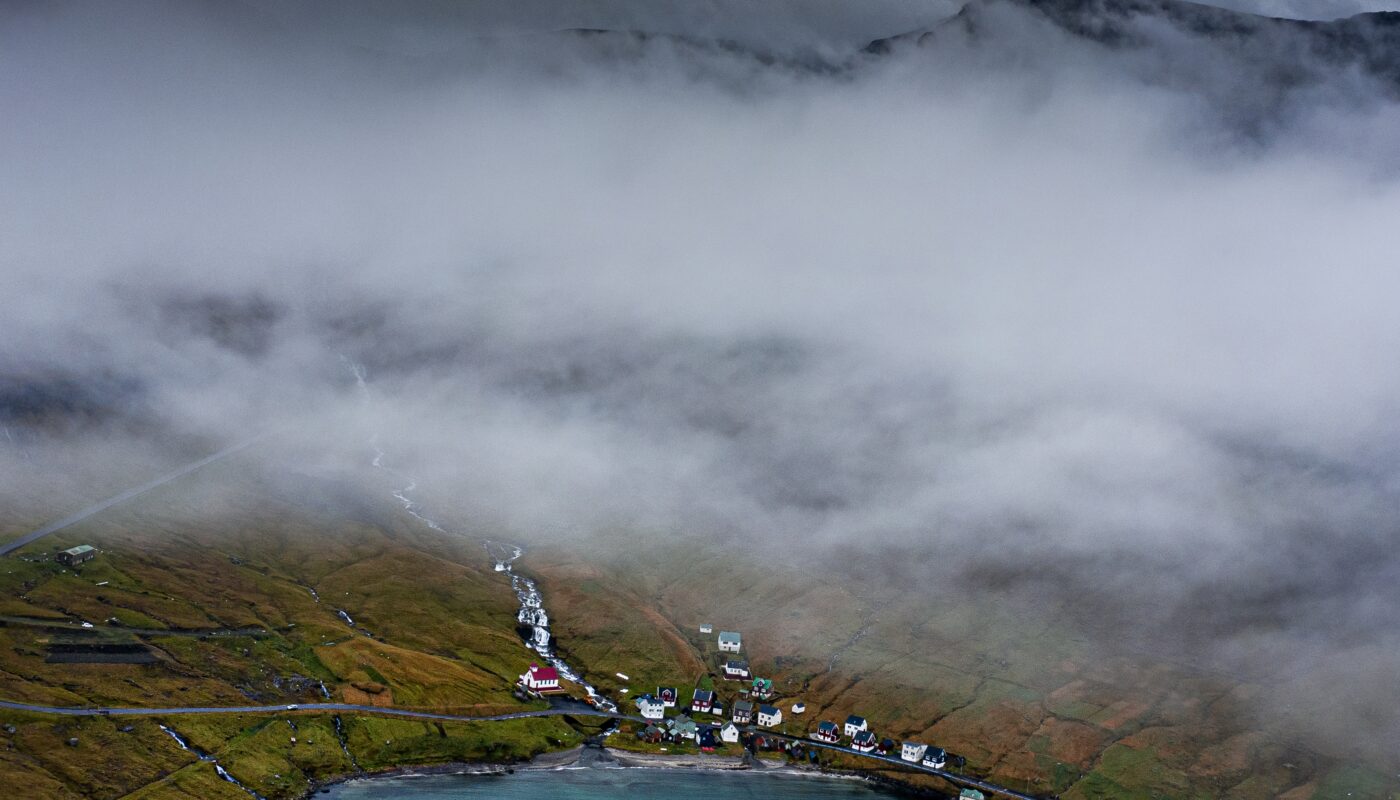
- Fog in the mid-elevations, which can settle over trails and forested areas
Unlike broad weather systems driven by continental fronts, these mountain-induced processes are highly localized and can produce showers or clouds on Rigi while nearby areas remain clear.
5. Aspect and Sun Exposure: How Slopes Behave Differently
The direction a slope faces — its aspect — greatly affects how it heats and cools.
South-Facing Slopes
- Receive more direct sunlight throughout the day
- Warm earlier in the morning and retain heat longer in the evening
- Experience higher evaporation rates, leading to drier soils and earlier plant activity in spring
North-Facing Slopes
- Receive less direct sunlight
- Stay cooler and retain moisture longer
- Often remain snow-covered later into the season
These contrasting conditions create microhabitats for plants and animals, and also influence where hikers encounter sun versus shade, or icy patches versus melted trails.
6. Wind Patterns Around Rigi
Wind around Rigi is shaped by both large-scale synoptic patterns and very local forces.
Thermal Winds
As discussed earlier, daytime heating creates upslope breezes while nighttime cooling leads to downslope drainage winds. These patterns can be strong enough to affect temperature and riding conditions on trails and ridge lines.
Lake Breezes
Analogous to coastal sea breezes, Rigi experiences lake breezes, where air moves from the cooler lake surface toward the warmer slopes. These breezes can:
- Lower effective temperatures on lower slopes
- Increase wind speeds near lakeshores and foothills
- Shift depending on the relative temperature difference between land and water
Combined, these wind systems contribute to highly dynamic and sometimes unexpected conditions across short distances.
7. Snow Cover and Albedo Feedback
Snow cover greatly affects how Rigi interacts with sunlight.
High Albedo of Snow
Snow reflects most incoming solar radiation — a property termed albedo. When snow covers a slope:
- Less solar energy is absorbed by the ground
- Cooling is enhanced, which stabilizes cold temperatures
- Snow patches can persist deep into the warmer months
As snow melts, the darker ground beneath absorbs heat more efficiently, accelerating localized warming. This transition can create abrupt microclimatic contrasts over just tens of meters — snow-covered ridge tops beside green meadows below.
8. Rigi’s Microclimate and Local Ecosystems
The weather patterns described above foster unique ecological zones on Rigi. As elevation, sun exposure, and moisture vary, so do plant communities and animal habitats.
Vertical Vegetation Zones
- Lower Slopes: Mixed forests with deciduous and coniferous species
- Mid Slopes: Dense spruce and fir groves where fog and cool breezes are common
- Upper Slopes: Alpine grasses, shrubs, and mountain herbs adapted to wind, sun, and short growing seasons
This diversity arises from microclimatic gradients — even though the mountain itself isn’t extremely high, its varied aspects create multiple biological niches.
9. Human Impacts on the Rigi Microclimate
People have lived, worked, and traveled around Rigi for centuries — and their presence has also shaped local conditions.
Agricultural Land Use
Pastures and fields where trees have been selectively removed or planted have altered local wind patterns and soil moisture.
Trail Networks and Tourism
Trails, rail lines, and lookout platforms change surface exposure and can slightly affect how wind and heat distribute across the landscape. This is especially noticeable in heavily trafficked areas near the summit and main tourist paths.
While these impacts are minor compared with natural forces, they remind us that even subtle changes to land cover can have measurable effects on local climate.
10. Why Rigi’s Microclimate Matters
Understanding Rigi’s weather systems is more than an academic exercise — it has practical implications:
1. Weather Predictability
Hikers, outdoor guides, and operators of the historic Rigi railways benefit from knowing how temperatures and winds can differ dramatically over short distances.
2. Biodiversity Conservation
Microclimates sustain specific plant and insect communities that might not survive in neighboring areas.
3. Tourism Planning
Operators can anticipate how microclimatic conditions influence visitor comfort, seasonal accessibility, and risk (e.g., sudden fogs or breezes).
4. Climate Change Insights
Mountain microclimates are sensitive indicators of broader changes. Monitoring how Rigi’s unique conditions shift over time contributes to understanding Alpine climate trends.
Conclusion
Mount Rigi’s distinct weather microclimate emerges from a complex interplay of geographic position, lakes and thermal gradients, slope orientations, wind systems, orographic influences, and seasonal snow cover. These factors combine to make Rigi’s weather locally precise, ecologically rich, and constantly changing — often in ways that differ noticeably from surrounding valleys and lowlands.
Whether you’re a hiker planning a summit trek, a biologist studying Alpine ecosystems, or a photographer chasing dramatic weather patterns, appreciating Rigi’s microclimate deepens your connection to this remarkable mountain. It is not just a scenic landmark — it is a living, breathing interplay of atmospheric forces, sculpted by elevation, water, and light.